About Us
Medical Research and Analysis (MRA) is a knowledge-driven academic platform committed to strengthening scholarship and informed discourse in the fields of medicine, healthcare, and life sciences. It serves as a credible and inclusive space where rigorous research, critical analysis, and continuous education come together to support students, researchers, and professionals at various stages of their careers. MRA is dedicated to nurturing a culture of evidence-based learning that encourages intellectual curiosity, scientific integrity, and practical relevance.
At the core of MRA’s mission is the promotion of high-quality, ethically sound, and impactful knowledge that contributes meaningfully to the evolving landscape of healthcare and medical innovation. The platform facilitates skill development through carefully designed short courses, research-oriented resources, and analytical content that address contemporary challenges in medicine and public health. By offering insightful articles, scholarly commentary, and applied learning modules, MRA enables learners to translate academic research into real-world practice.
MRA also aims to bridge the longstanding gap between theoretical research and practical application by fostering dialogue among academicians, clinicians, and industry professionals. Through collaboration, education, and dissemination of reliable knowledge, Medical Research and Analysis aspires to support informed decision-making, advance healthcare outcomes, and contribute to the global exchange of ideas in medical and life sciences.
ABOUT THE COURSE
The Certificate Course in Mental Health is a structured and comprehensive program designed to provide participants with a strong foundational understanding of mental health, psychological well-being, and common mental health conditions. In an era where stress, anxiety, and emotional challenges are increasingly prevalent, mental health literacy has become essential not only for healthcare professionals but also for educators, students, workplace leaders, and community members. This course introduces participants to the biological, psychological, and social dimensions of mental health, enabling them to understand mental illnesses within a holistic framework. It covers common psychiatric disorders, risk factors, therapeutic approaches, crisis intervention principles, ethical considerations, and public mental health perspectives. Beyond theoretical understanding, the program emphasizes practical skills such as recognizing early warning signs, developing supportive communication techniques, reducing stigma, and promoting resilience. Participants will also explore the role of social determinants, legal frameworks, and policy initiatives in shaping mental healthcare systems. Through interactive discussions, case-based learning, and reflective exercises, this course aims to build awareness, sensitivity, and informed engagement with mental health issues in academic, professional, and community settings. By the end of the course, participants will be equipped not only with knowledge but also with practical tools to contribute to a more mentally healthy and supportive society.
COURSE HIGHLIGHTS
- Comprehensive 10-Class Structured Program covering foundational, clinical, social, and legal aspects of mental health
- Expert-Led Interactive Sessions with discussion-based learning and real-life case examples
- Holistic Approach integrating biological, psychological, and social perspectives (Biopsychosocial Model)
- In-Depth Understanding of Common Mental Health Disorders including anxiety, depression, mood disorders, trauma-related conditions, and substance use disorders
- Crisis Awareness & Suicide Prevention Module with focus on early warning signs and protective factors
- Introduction to Therapeutic Approaches including psychotherapy basics, counseling techniques, and
- Focus on Social Determinants & Public Mental Health, including stigma reduction and community
- Legal & Ethical Framework Overview including confidentiality, informed consent, and mental healthcare
- Practical Skill Development in supportive communication, active listening, and stress management
- Certificate of Completion upon fulfilling attendance and course requirements
COURSE OVERVIEW
Schedule & Mode of Delivery
- Days: Saturday & Sunday
- Timings: 7:00 PM – 8:00 PM
- Mode: Live & Interactive Sessions
- Platform: Google Meet Session Recordings will be provided
Who Can Apply?
This course is open to individuals from diverse academic and professional backgrounds who are interested in understanding and promoting mental health.
Eligible participants include:
- Undergraduate and postgraduate students (any discipline)
- Medical, nursing, psychology, and allied health students
- Teachers, educators, and academic professionals
- HR professionals and workplace managers
- Law students and legal professionals interested in mental health law
- Healthcare and social work professionals
- NGO workers and community volunteers
- Individuals interested in mental health awareness and advocacy
NOTE: No prior background in psychology or psychiatry is mandatory. The course is designed to be accessible, informative, and practical for both beginners and professionals.
COURSE OBJECTIVES
- To develop foundational knowledge of mental health, psychological well-being, and mental illnesses within biological, psychological, and social frameworks.
- To enhance mental health literacy by enabling participants to identify common mental health disorders, recognize early warning signs, and understand risk and protective factors.
- To promote awareness and sensitivity toward stigma, discrimination, and social determinants affecting mental health.
- To introduce therapeutic approaches and treatment modalities, including basic understanding of psychotherapy, counselling techniques, and psychiatric interventions.
- To build practical skills in supportive communication, active listening, crisis response principles, and emotional regulation strategies.
- To familiarize participants with ethical and legal aspects of mental healthcare, including confidentiality, patient rights, and informed consent.
- To encourage resilience and preventive mental wellness strategies at individual, academic, workplace, and community levels.
- To empower participants to contribute positively to mental health advocacy, awareness initiatives, and supportive environments in their respective professional or social settings.
COURSE CURRICULUM
SESSION 1: Orientation Session
SESSION 2:
- Introduction to Mental Health & Psychological Well-being
- Definition of mental health (WHO perspective)
- Difference between mental health and mental illness
- Components of psychological well- being
- Biological, psychological & social models (Biopsychosocial model)
- Myths and misconceptions about mental health
- Mental health in contemporary society
SESSION 3:
- Common Mental Health Disorders
- Anxiety disorders
- Depression and mood disorders
- Bipolar disorder
- Schizophrenia and psychotic disorders
- Obsessive-Compulsive Disorder (OCD)
- Post-Traumatic Stress Disorder (PTSD)
- Substance use disorders
- Warning signs and early symptoms
SESSION 4:
- Mental Health Across the Lifespan
- Child and adolescent mental health
- Academic stress and youth mental health
- Adult mental health challenges
- Workplace stress and burnout
- Geriatric mental health
- Gender and mental health considerations
SESSION 5:
- Risk Factors, Crisis & Suicide Prevention
- Biological and environmental risk factors
- Trauma and adverse childhood experiences
- Understanding stress and coping mechanisms
- Self-harm behaviors
- Suicide risk assessment basics
- Crisis intervention principles
- Protective factors and resilience building
SESSION 6:
- Therapeutic Approaches & Treatment Modalities
- Overview of psychotherapy
- Cognitive Behavioral Therapy (CBT) basics
- Counseling techniques
- Medication in mental health (overview of psychiatric medications)
- Role of psychiatrists, psychologists, counselors
- Lifestyle interventions and holistic approaches
SESSION 7:
- Social Determinants & Public Mental Health
- Mental health and socio- economic factors
- Impact of poverty, discrimination, and marginalization
- Mental health and digital media
- Community mental health programs
- Mental health awareness campaigns
- Reducing stigma and promoting inclusivity
SESSION 8:
- Legal, Ethical & Policy Framework in Mental Health
- Mental healthcare rights
- Informed consent in mental health treatment
- Confidentiality and patient privacy
- Ethical responsibilities of professionals
- Overview of Mental Healthcare legislation (relevant to country context)
- Institutional care vs community-based care
SESSION 9:
- Practical Skills, Self-Care & Mental Wellness Planning
- Recognizing early signs in self and others
- Basic supportive communication skills
- Active listening techniques
- Emotional regulation strategies
- Stress management tools
- Creating a personal mental wellness plan
SESSION 10:
Concluding Session Course recap & feedback
IMPORTANT DATES
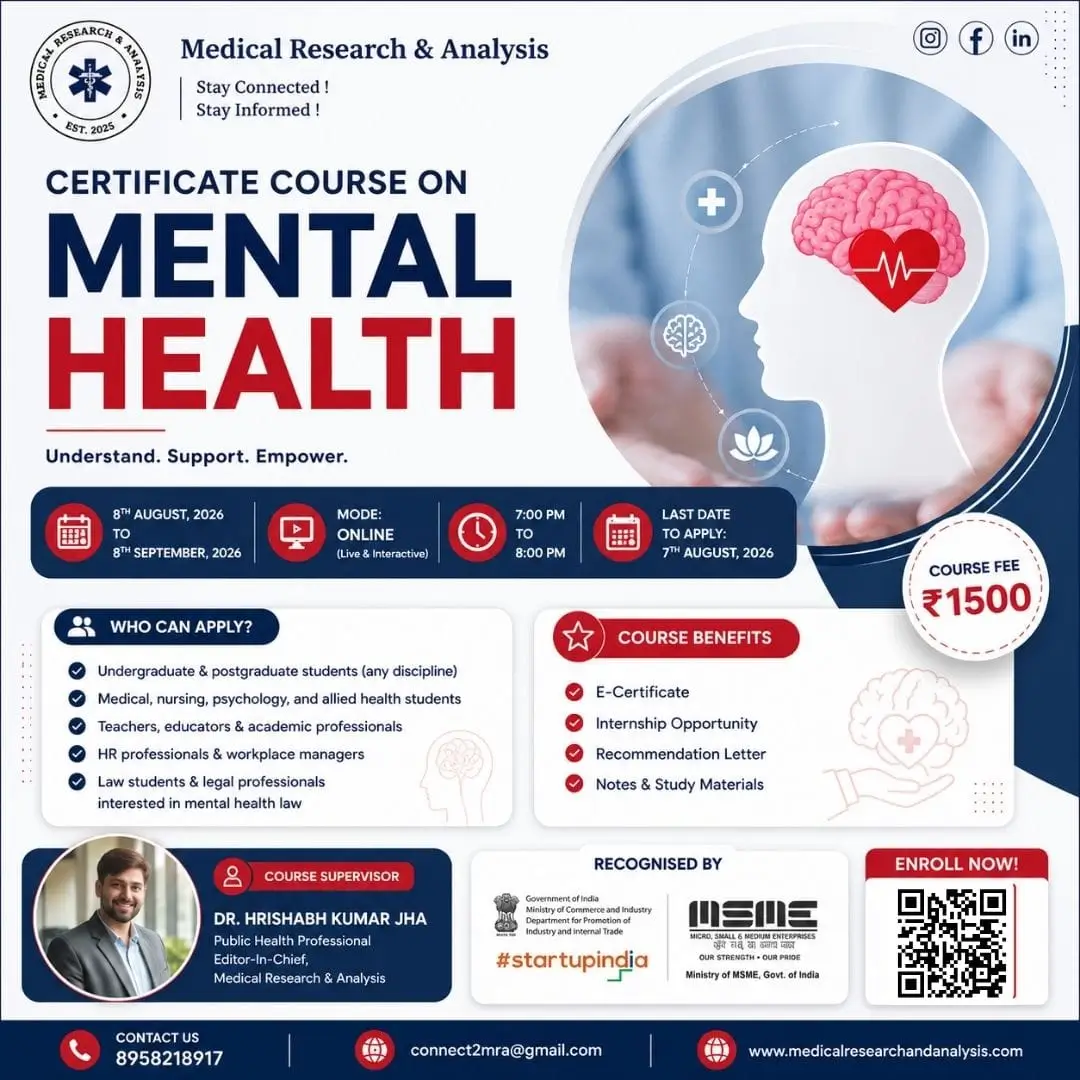
Last Date to Apply: 7th August, 2026
Course Start Date: 8th August, 2026
Course End Date: 8th September, 2026
PERKS
- Certificate of Completion: Recognized certification upon successful completion of the course.
- Internship Opportunity: Gain hands-on experience through internships with legal professionals.
- Letter of Recommendation: Receive a personalized recommendation to support your career growth or academic pursuits.
MENTOR & SUPEVISOR
Dr. Mahvish Fatima
Assistant professor, Department of Psychology | AMU

Dr. Hrishabh Kumar Jha
Public Health Professional, Editor-In-Chief,
Medical Research & Analysis
Career Prospects and Scope
Mental health is one of the fastest-growing and most crucial fields globally. With increasing awareness about psychological well-being, stress management, and emotional resilience, there is a rising demand for individuals equipped with mental health literacy and support skills across sectors.
Contact Us
Help Desk Number: 89582 18917
Email Address: connect2mra@gmail.com